


On knowing what they know
We have recently seen the entry of the Sun into Gemini, which for the first time shines its light on a new recurrence of an ‘old’ era. This is the time of Uranus in Gemini and it last graced us between ~1942-1949. For many decades we have only been able to see this time period through the lens of the Boomer but for the next seven years we will see it through our own eyes. It is inevitable, if unfortunate, that a new appraisal of the ‘Boomers’ will emerge as a result.
The many criticisms of the Baby Boomer generation are fully warranted, well-earned, just and indelible, but as most of them are clearly aware it is only the illustrious who are deemed worthy of such effluent contempt. The rest of us must now grapple with the fact that we are entering an era for which this scorned cohort are the walking, talking, crystallized embodiment, and that it is a good era. It therefore contains the seeds of that which is good about the Baby Boomers and for the next seven years we will find ourselves reminded of their better qualities. What will emerge by the end is a grudging acknowledgement of their considerable contributions which are – if you can believe it – nearly equal to their vast failings.
Understand that I do not like this any more than you do. In the study of time as measured by the objective and inalterable Calendar we are often forced to confront truths which makes us know or feel things we would rather not. The disciplined acceptance of this information is critical to successful interpretation of time and the failure to do so by mediocre practitioners is one of the major reasons why the brand of “astrology” is so poor. This is especially relevant in our current Uranus period wherein proper thinking is back in style. This is not a time to be stupid, and ignoring the data in service to our personal feelings and interests would be stupid, so we are not going to do that. The fact that behaving in such an intellectually proper way would make the Boomers proud should not cause us to reject it out of spite (if only because they are unlikely to be paying close enough attention to us to notice in the first place).
Do not grant me any personal grace for being mature and well-tempered about this. As the child of boomer parents who could never be described as ‘successful’ in that task I share every bias and animosity toward the cohort imaginable. Most likely it is my recent experience of having a wisdom-tooth extracted that inspires and motivates this article. The close-up reminder of the specific details of pulling teeth jangled my synapses in such a way as to let me go through the process of extracting optimistic positivity from an infected corpus. Further, I already have a splitting headache that will last for a few more days so it is not as if a good mood will be spoilt by the endeavor. In the spirit of these Uranus-in-Gemini times we must therefore go with it and see if we can figure it out from a neutral standing that is best for coming to a conclusion that can produce beneficial and actionable results.
Turning back to Grandpa and Grandma let’s review the generational interpretation of this placement previously discussed here:
The first seven-year group has Uranus in the sign of Gemini. Gemini is the mutable air sign, ruled by Mercury. It is interested in ideas, innovation, and communication. Uranus is the disruptor and it will make matters in its sign more electric, shocking, and surprising. With Uranus in Gemini we should expect a way of thinking that comes on quickly and is multi-faceted, original, innovative and disruptive. The action of Uranus combines very naturally with Gemini, which is sort of doing the same thing already (moving around in the air). Uranus gives it a boost, sending those ideas out further than they would otherwise, encompassing an ever wider scope of possibilities. These people will be flexible, ideas-oriented and very communicative. When disrupted, this cohort will consider doing things differently, explore and invent what could potentially be done, and communicate about it. Their thinking will evolve quickly, consider multiple possibilities, and be very creative, if unfocused and out there. In my estimation this is one of the strongest placements for Uranus as Gemini is fundamentally anti-fragile when it comes to being disrupted. The main downsides will be an overly-intellectual orientation and some potential for getting distracted by inconsequential things.
The sign position of Uranus primarily dictates the intellectual and cognitive attributes of an era. This tells us how well such things go and what types of things tend to be the recipient of attention and the subject of interest. In Gemini we find a highly functional intellectual era that can generate new ideas, solutions, and perspectives easily and quickly. This sign is about communication and exchange and literally pulling things “out of the air.” An important attribute to keep in mind is that of speed because it is in direct contrast to our previous seven-year era which was notably slow. Ideas will come faster and be more effective, more quickly. Things that seemed intractable post-2018 will suddenly find solutions. The absence of a certain stubborn resistance to change we have become used to will become noticeable. Inventive ideas will proliferate as a result of the quick exchange of information and their uninhibited flow.
To get an idea of how significant this can be, let’s take a look at some notable inventions from the previous 1942-1949 Uranus in Gemini period:
- The transistor
- The microwave oven
- Color television
- Velcro
- Atomic bomb
- Nuclear reactor
- The computer
- The space rocket
- The Polaroid camera
- Mobile telephony
Depending upon your knowledge of science and engineering this list may be merely remarkable or it could be astounding. The second one is correct as each of these is not just some iterative product or cute refinement of an existing idea but rather a completely new concept whose invention created a foundation upon which many other important developments sit. It is proper to say that the modern technologies we are immersed in today are all directly derived from developments made during the previous Uranus in Gemini era.
None of these things were invented by Baby Boomers, of course. They were all invented by people more like you who had come of age in the decades prior and were positioned to take action upon the new ideas they were pulling out of the refined Uranus in Gemini air. Meanwhile, for the Baby Boomers inventions like this were commonplace in their youth. The world they grew up in was one in which significant innovations were possible and this belief was crystallized within them from the start. They believed in world-changing things because they saw them up close and they knew how they were done. This created assumptions about what is possible for a person and those assumptions result in expectations of others. Their age cohort all shared the same intellectual abilities and so these expectations were normally met by those closest to them.
The person with a highly-functional Uranus placement is usually going to develop a degree of confidence in their ability to “work things out” intellectually. This is someone who is going to feel comfortable putting themselves in challenging situations because they believe – correctly – that they will be able to discern their way through it. For this placement that is even more true because it will coincide with their normal way of being – intellectual challenges are what they do for breakfast. If you are under the assumption that big breakthrough ideas will invariably come along to disrupt what came before then what loyalty are you likely to have to what already is? There is a certain expectation of the ephemeral that comes with this placement and while in its positive manifestation it welcomes and creates new things there is also the other side of the coin, which can fail to appreciate that which already is. This isn’t because they don’t like how things are, it’s because they don’t think they will last anyway. This assumption is ingrained in the first half of the Boomer cohort and it is the first thing that has been overlooked in recent judgments of their character which must be re-examined.
Today we find that many young people look at the world ahead of them and do not have great confidence that it will persist long enough for them to engage with it fully. We decry this state of affairs because it is probably true, openly promoted by unsavory characters, and objectively unjust. As the institutional and social bedrock that has sustained us for decades continues to dissolve and fade we will increasingly appreciate the perspective that the Boomers carried with them for their entire life – that what is solid today will dissolve soon and to “keep on keepin’ on” is necessary to maintain equilibrium.
The oldest Boomers met the world and studied it from an advantaged cognitive position. They quickly concluded that it was unsustainable and that a new world was not just inevitable but rapidly approaching. Further, they understood that they were the people who were responsible for creating that new world. Now that last one was a bit excessive but it was at least directionally true. They did have an important, even critical role in building what was to come. They did not have to take the reins and force it upon everyone else without much input from them. They did not have to abandon much of what came before without giving it the studied attention it deserved before concluding it was one of those unsustainable things that needed to be reformed. They did need to set out and discover new avenues, ideas, and directions, and as a cohort they were highly successful in accomplishing this.

To explore this let’s examine some largely-buried early Boomer lore. In the years in which they became teenagers and young adults there emerged a phenomenon that came to be known as “The Hippie Trail.” This involved young people traversing over land across Eurasia, typically ending up in India somewhere. While individual motivations surely varied the core purpose was to get out of the “Western” society of the United States and Europe and explore what lay beyond. They were attracted by ideas of Eastern mysticism, exoticness, and the freedom of the road. These people usually had very little money and often traveled by local bus, train, even hitch-hiking. What they did not have was any great sense of what they would find or guides to help them. There were no mobile phones, no internet, not even travelers guidebooks. They did not speak the languages of the places to which they traveled and most of those whom they would encounter did not speak their language. In these times the currency changed frequently as borders were crossed and there were not easy visa procedures to look up on-line. They wanted to go to these places and so they did, expecting to figure it out along the way. Over time some became ‘guides’ for others and shared experiences in photocopied notebooks to ease the route. Facilities such as ‘hostels’ were opened in far-flung locations to aid later travelers.
To many people today this resembles something we call “backpacking” or may recall “travel vlogs” that you find on video sharing sites. All of that originates with Boomers who made it up as they went along. Considering their current reputation for taking package vacations on cruise ships this might surprise you but it happened. The motivation or purity of intent is not important here – what matters is that they had an idea and they pursued it, successfully, in large numbers (probably hundreds of thousands of them did this).
This behavior of exploring the boundaries is present in many other early Boomer stories. The drug experimentation of the 1960’s is of a very similar nature, just turned inward. They came upon a new way of interacting with the world and pursued it vigorously, studying and mapping out the parameters with a pioneering spirit. They took journeys fraught with risk and uncertainty solely to know what it was like and to document and share it with others. They later did the same in fields related to what we might call personal identity, joining various ‘self-help’ workshops and training’s, studying foreign religions, and embracing alternative living/family/relationship dynamics. The merits or outcomes of these are not what is important, rather it is the observation that the cohort had the intellectual confidence to navigate uncharted waters in search of new and interesting ways to do things. Understanding that the foundations they inherited were likely to dissolve they rushed head-on into the process of establishing new foundations and approaches. They did these things completely, thoroughly, and with great enthusiasm. They built entire social and cultural institutions that all who came after them grew up amidst, often not realizing that these were things that were innovated by intellectually adventurous Baby Boomers.

As they grew into young adults and established families we saw more examples of this. The ‘back to nature’ movement coincided with a large exodus from urban environments that featured Baby Boomers moving their families to remote, naturally beautiful locations. Instead of staying in the urban core where careers and earnings may have been easier they elected to grind out a living however they could in order to enjoy a pace and way of life they had discerned to be healthier and more natural. They chose to avoid the “‘rat race” of trying to make as much money as possible and instead targeted what they deemed to be enough to provide for themselves and their families. They found work in whatever capacity was available locally by becoming teachers, nurses, mechanics, florists, and farmers.
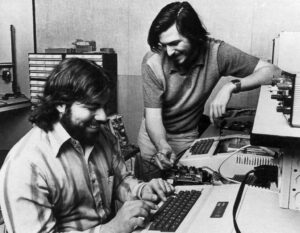
The ones who stayed in the urban areas tended to pursue new careers paths – moving into emerging industries such as computing/software and even modern finance, rather than “joining the firm” and working as a cog in a wheel at some decades-old blue chip company their own parents would have been impressed to join. These choices were about carving their own path, separate from the paths they were told to pursue. They did this because they had the intellectual confidence to size up their options and imagine something new. The most important and influential industry of our time was in large part built by Baby Boomers. The most important steps in converting glorified calculating machines into a global multimedia library occurred in the years when there was a sufficient supply of creative minds that could puzzle out just how to make a box appear on a screen by typing numbers, and get that box to move around in the way someone looking at it wanted it to.
These are just some examples of many, but the theme should be clear. We live and have always lived in a world that was in great part built by the imagination and execution of the Baby Boomer. These were people who saw an old world slipping away and an unsustainable path ahead, so they constructed new foundations to replace them. They didn’t just notice this but they did something about it, and we all live in the results. It is not all great, but why should we expect it to be? The fact that it is at all is what we need to be noticing.
What did the Baby Boomers know that has eluded us all of this time? With Uranus back in Gemini after eight decades it is time for all of us to ask that question in a serious way and to try and draw inspiration and lessons from what the cohort born under its influence did with that knowledge. Most foundational appears to be an intellectual confidence that is sharpened by taking action. Today, most can see that things are prime for change if only because so many foundations of our society seem to be quickly headed for irrelevance. These include many that were laid by the Baby Boomers themselves and are ready for relegation. Instead of clinging to preservation of old ways, the inspiration from the Baby Boomer is to push forward and make something new, because you know you can do it.
For the next seven years, feel free to give it a try, because the wind is now at your back in the way it always was for them.

Leave a Reply